Strengthening the Foundations for Trusthworty, Open Research: Annual Report 2025

Building Resilient Infrastructure, Standards, and Practices

At the Center for Open Science (COS), we develop and champion the infrastructure, standards, and evidence to ensure that open, credible, and reproducible research can endure and thrive. In a year when removals of public data, funding uncertainty, and shifts in research governance raised new questions about the sustainability and accessibility of evidence, our work focused on protecting research as a public good—keeping it accessible, usable, and preserved over time so that it can continue to inform decisions that matter.

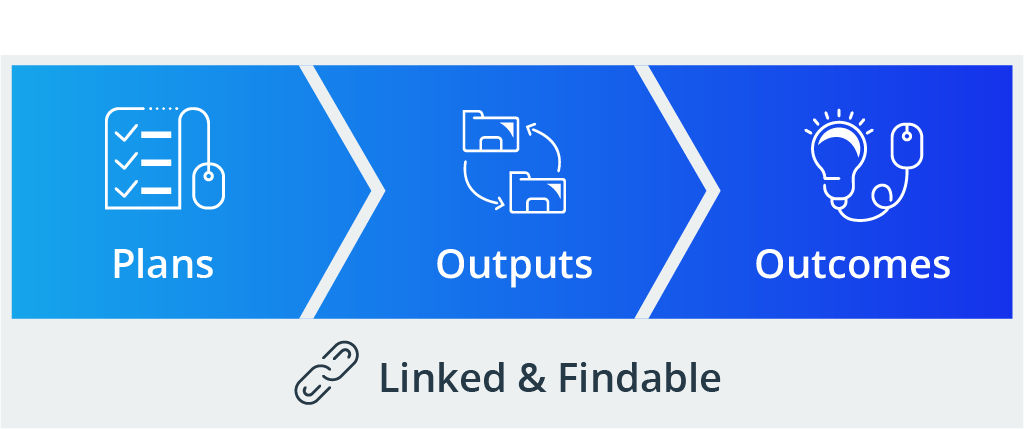
Central to our work is Lifecycle Open Science — research with plans, outputs (data, materials, code), and outcomes that are publicly accessible and findable. By making these components accessible and discoverable, lifecycle open science makes it easier for researchers to collaborate and reuse materials, for practitioners and public services to interpret and apply evidence, and for communities to see how claims are built and tested.

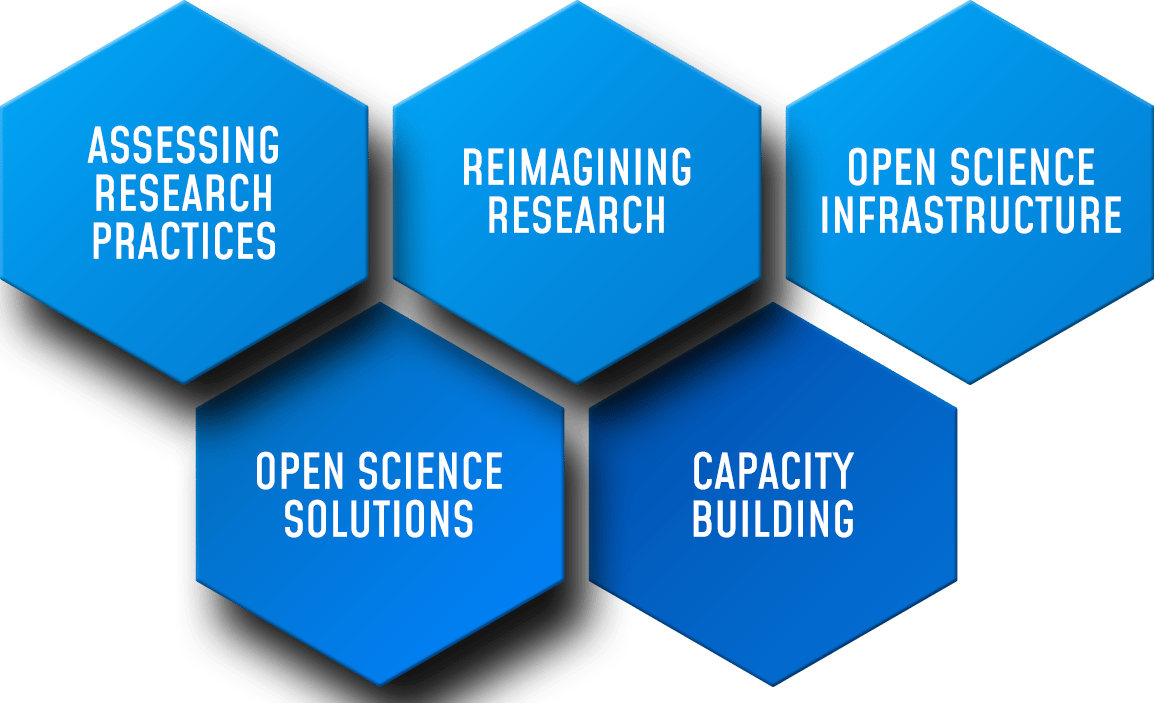
COS collaborates with many individuals and organizations to assess current research practices, reimagine how research could be done and assessed, build and integrate open infrastructure, and build capacity of researchers and research supporting institutions to advance lifecycle open science and accelerate discovery.

COS is just one part of a much broader movement. Around the world, researchers, librarians, funders, publishers, and community advocates are testing and scaling open practices in their own contexts. We're grateful to our partners around the globe who are so dedicated to this work. As a community, we're building a future where open, trustworthy research is the norm.

profile-nosek
Brian Nosek

Brian Nosek
Executive Director
Center for Open Science
Matthew Buys
Matthew Buys

Matthew Buys
Board Chair
Center for Open Science

2025 At a Glance

COS supports researchers at every stage of their work, fostering awareness and adoption of open practices through engagement, training, and collaboration. These efforts were reflected in the following highlights:
47%

Increase in OSF users fully engaging with lifecycle open science actions (creating a public project, registration, and preprint)

138943

New public plans, outputs, and outcomes were added to OSF in 2025, reflecting growing use of open workflows across research communities

230+

Researchers were directly involved in COS research projects as participants, reviewers, and/or editors

10000+

Registrants engaged through free, public webinars on a range of open science-related topics, and delivered in-depth, customized training to over 100 researchers, including specialized train-the-trainer sessions that help researchers advance these practices in their own communities

Our Approach: How We Create Change

Lifecycle Open Science

Lifecycle Open Science emphasizes transparency across a research project’s lifecycle. It involves making research plans, materials (data, code, protocols), and outcomes publicly accessible and linking them so that others can find, assess, and reuse them.

Open practices enable research consumers to see how evidence was generated, access plans, data, and code, and assess claims. Researchers, in turn, hold themselves accountable by making their work openly available—supporting reproducibility, identifying errors, and enabling others to build on their findings.

Theory of Change

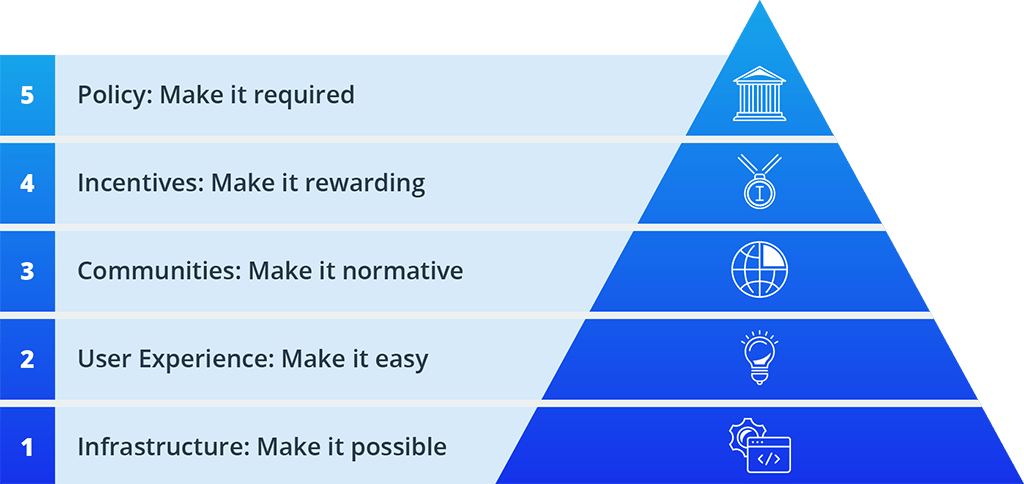
Our Theory of Change guides how we create meaningful, lasting impact. COS demonstrates what is possible through research projects and tools, improves practices through infrastructure and standards, and promotes adoption by engaging communities and shaping incentives. Depending on discipline, background, and methodology, researchers differ in their readiness for adopting lifecycle open science. We tailor our approach to meet them where they are.

2025 Programmatic Highlights


2025 Programmatic Highlights Read more

Engaging the Community: 2025 Events

Nearly 40 virtual events and webinars were held in 2025, including:

Global Lessons, Local Contexts: Regional Perspectives on Open Science Education

Estimating Replicability: Insights from the Brazilian Reproducibility Initiative

Preregistration Essentials: What It Is, Why It Matters, and How to Do It

Libraries and Open Science: Overlaps and Gaps with the Research Community

Federal Policy Engagement

In 2025, COS deepened its engagement in U.S. federal science policy, focusing on how public investment in research is communicated, evaluated, and preserved. COS policy leadership submitted formal comments in response to a National Institutes of Health (NIH) Request for Information on limiting allowable publishing costs. The submission, authored by Maryam Zaringhalam, Senior Director of Policy, and David Mellor, Senior Policy Analyst, outlined evidence-based recommendations to better align research assessment, incentives, and investments with actions that can better promote the openness and trustworthiness of NIH-funded research.


Researcher and Member Highlights

The Power of Preprints

For Maris Vainre and her co-authors, sharing their study as a preprint led to media attention from outlets like New Scientist, over 1,800 downloads in several months, and invitations to share their findings with audiences in and beyond academia:

“There’s little to lose and a lot to gain. Preprints make research findings available to a wider audience—including practitioners and policymakers who often don’t have access to paywalled journals but do have the interest and expertise to engage with the work. Having a freely available preprint can help findings reach real-world application faster.”
Maris Vainre

Maris Vainre, PhD
Research Fellow, Institute of Psychology
University of Tartu

Unlocking GFS Data Though Preregistration

Rafael Acevedo, whose work explores economic freedom, growth, and development in global contexts, is among the researchers drawing on the rich Global Flourishing Study (GFS) dataset. Access to GFS data enhances his research on economic freedom, growth, and development.

“I think that [open science] gives researchers the opportunity to be recognized for what they are doing. It also could help you connect with other researchers who are interested in your work and similar topics, and to be updated on newly available datasets, literature, and research advances. I believe that any opportunity to increase your research network is important and should be taken.”
Rafael Acevedo

Rafael Acevedo, PhD
Program Manager, Menard Family Center for Economic Inquiry
Creighton University

Collaboration and Stewardship Across the Research Lifecycle

Vrije Universiteit Amsterdam, an OSF Institutions member, is advancing open science by building coordinated support for their research community through an integrated model that connects infrastructure, training, and policy development.

“[W]e want to increase scientific collaborations and sharing of information for the benefit of science and society, to foster diversity, equity, and inclusion, and to open these processes beyond the traditional scientific community— so, collective benefit.”
Sander Bosch

Sander Bosch
Open Science Coordinator
Vrije Universiteit Amsterdam

Building Trust and Transparency in Sensitive Research

Open practices are embedded throughout Amélie Godefroidt’s research, which explores public opinion during and after wars and other civil conflicts. Godefroidt also designed and led an Open Science in the Social Sciences summer program at her institution, which combined hands-on training with candid discussions about the challenges and opportunities of open practices.

“OSF has become my central hub for organizing research projects—from preregistration and storing data and code to sharing outputs with collaborators and making my work publicly accessible. I also regularly use OSF as a source of inspiration to improve my pre-analysis plans. Beyond research, one of the great things about open science is that educational resources on open science are often open, too. As I was preparing this course, I found myself overwhelmed, in the best possible way, by the sheer amount of high-quality material out there.”
Amélie Godefroidt

Amélie Godefroidt
Postdoctoral Researcher and Lecturer
KU Leuven Centre for Research on Peace and Development

COS in the Media

Research Transparency and Culture Reform

Executive Director Brian Nosek discusses research culture reform and the importance of advancing transparency on the Freakonomics podcast:

“We have to make it easy for researchers to be more transparent with their work. If it’s really hard to share your data, then adding on that extra work is going to slow down my progress. We have to make it normative. We have to deal with the incentives. Is it actually relevant for my advancement in my career to be transparent, to be rigorous, to be reproducible? And then we have to address the policy framework. If it’s not embedded in how funders decide who to fund, institutions decide who to hire, and journals to decide what to publish, then it’s not going to be internally and completely embedded in the system.”
Brian Nosek

Brian Nosek
Executive Director
Center for Open Science
Pushing for Greater Inclusivity in Open Science

Open science has made major progress in recent decades, but challenges persist. Tim Errington, Senior Director of Research, shares why open science must push for greater inclusivity and accessibility in an op-ed for Times Higher Education:
“The progress made since 2013 shows that open science is no longer niche; it’s becoming the norm. But for it to reach its full potential, we must push for more inclusivity and transparency across all regions, disciplines and organisations in the research ecosystem. By fostering a global research culture that values transparency, we can build trust and ensure research benefits everyone.”
Tim Errington

Tim Errington
Senior Director of Research
Center for Open Science

Looking Ahead: Strategic Direction (2026-2028)

COS's 2026–2028 strategic plan focuses on advancing lifecycle open science—research with publicly accessible plans, outputs (data, materials, code), and linked outcomes that make the basis of scientific claims visible and assessable. We will demonstrate, improve, and promote practical pathways for enacting and evaluating lifecycle open science through open infrastructure, evidence-building, policy and incentive alignment, and support that is tailored to meet researchers where they are in adopting open practices.

Through case studies, evaluation, and partnerships, this approach aims to shift norms, incentives, and practices in ways that increase research trustworthiness while meeting communities where they are and supporting sustainable, system-level change.

As part of our ongoing EU expansion, COS is listening and connecting with existing open scholarship efforts, exploring the nuanced landscape, and identifying where we can add value—through shared infrastructure, research collaboration, convening capacity, or other partnerships—without duplicating existing work. Establishing an EU entity expands our ability to operate effectively across regions while maintaining a global mission, beginning with communities where strong relationships and active collaboration already exist.


Get to Know COS

MissionSupportersFinancialsStaffBoardDonate

Looking Ahead


Previous Impact Reports

Impact Report 2023
Impact Report 2023
Impact Report 2022
Impact Report 2021
Impact Report 2020